Understanding Solar Panel Degradation Rates
All solar panels lose a small amount of efficiency each year, known as the degradation rate. Most high-quality panels degrade by just 0.5% annually. In this guide, we explain what causes solar panel degradation, how to calculate your system's lifespan, and tips to keep your panels highly efficient.
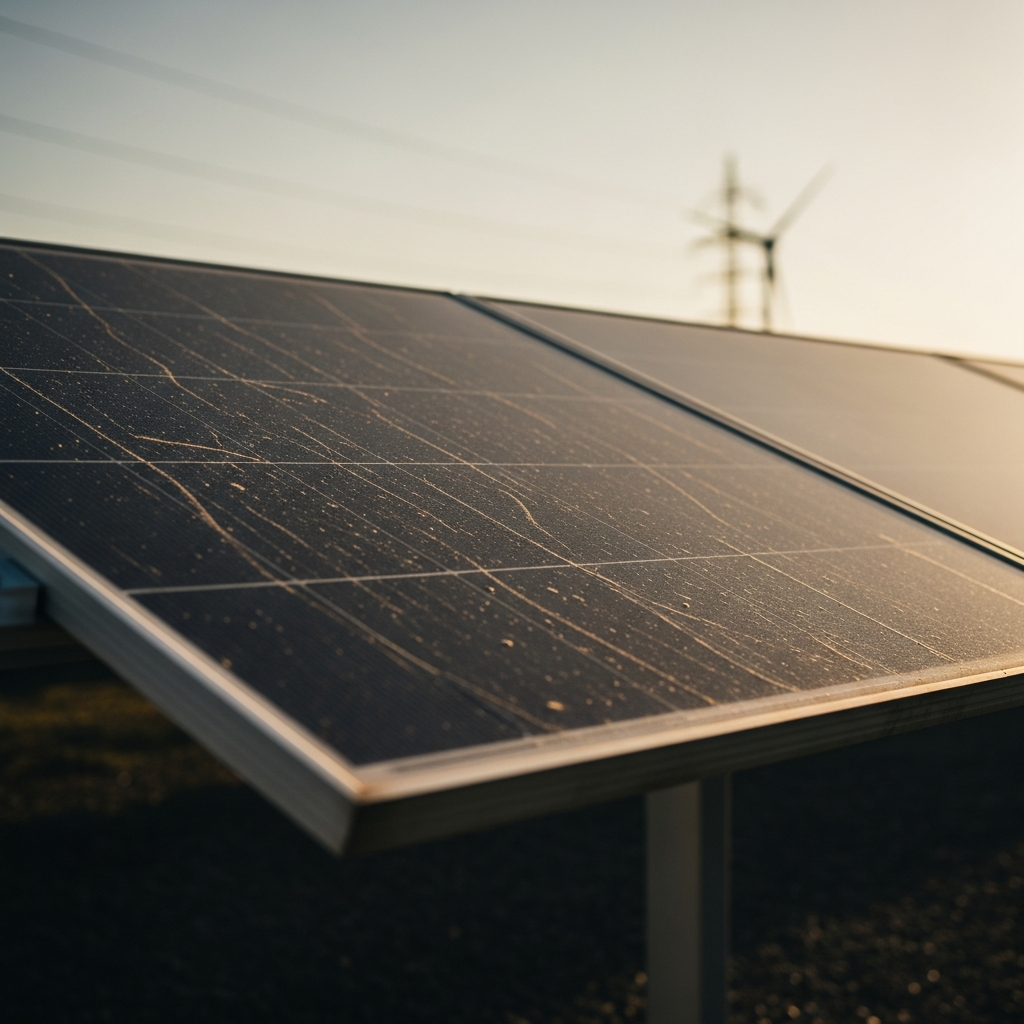
The Indian Homeowner’s Ultimate Guide to Solar Panel Degradation: Maximizing Lifespan and ROI
Section 1: Demystifying Solar Panel Degradation
1.1 Introduction: The 25-Year Promise
The residential solar market in India is booming. Driven by initiatives like the PM Surya Ghar Muft Bijli Yojana, thousands of households are making the switch to secure lower electricity bills and true energy independence. However, as new solar owners look toward a future of free electricity, they often encounter the myth of "infinite free power." While solar panels are incredibly durable, they do not produce 100% of their rated power forever. To maximize your long-term return on investment, you must understand how they age.
1.2 What is the Solar Panel Degradation Rate?
The solar panel degradation rate is the natural, gradual reduction in a module's power output capacity over time.
Think of it using the "Smartphone Battery" analogy. When you buy a new phone, the battery lasts all day. After three years of constant charging and discharging, you might find yourself needing a mid-day recharge. The battery hasn't "broken," but its maximum capacity has naturally degraded. Solar panels undergo a similar, albeit much slower, aging process due to continuous exposure to sunlight and weather.
1.3 Industry Benchmarks: What is Normal?
By global standards, a healthy degradation rate falls between 0.3% and 0.8% per year. This decline follows what engineers call the "Bathtub Curve" of degradation: * Year 1: An initial drop (usually between 1% to 3%) occurs as the solar cells chemically acclimatize to sunlight. * Years 2-25: A steady, slow decline sets in, typically averaging 0.5% annually. * Year 25+: The rate of decline may accelerate, but the panels will still produce highly usable power for your home.
1.4 Why Indian Homeowners Need to Care
Degradation isn't just a technical footnote; it directly impacts your financial Returns on Investment (ROI) and the payback period of your rooftop system. As your system ages, it will generate slightly fewer units of electricity.
Factoring in this gradual drop is absolutely critical when sizing a system for future household needs. If you plan to buy an EV in five years or are wondering can solar panels run a 1.5 ton AC alongside your current appliances down the line, you must account for the fact that your 5kW system today will perform slightly more like a 4.5kW system a decade from now.
Section 2: The Science of Degradation and the Indian Climate Factor
Understanding why panels degrade requires looking at both the internal engineering and external environmental factors—especially considering India's uniquely harsh weather conditions.
2.1 Technical Causes of Degradation (The Internal Factors)
- Light-Induced Degradation (LID): This is a chemical reaction occurring within the first few hours of sunlight exposure. Oxygen interacts with the boron used to dope the silicon cells, causing the standard Year 1 drop in efficiency.
- Potential-Induced Degradation (PID): High voltages in the system can cause electrons to "leak" from the cells to the panel frame. This power loss is heavily accelerated by high humidity.
- Microcracks: These are microscopic, invisible cracks in the solar cells. They can stem from manufacturing defects, rough transport on uneven Indian roads, or improper installation practices.
2.2 The Indian Environmental Gauntlet (The External Factors)
- Extreme Heat (Thermal Cycling): Scorching summers in states like Rajasthan, Delhi, and Gujarat cause panel materials (glass, metal, silicon) to expand and contract at different rates. This daily cycle strains internal solder joints.
- High Humidity and Monsoons: Torrential rains in coastal states like Kerala and Maharashtra test the waterproofing limits of the EVA (Ethylene Vinyl Acetate) encapsulation. If compromised, moisture ingress can lead to delamination and rapid PID.
- Dust, Pollution, and "Hot Spots": Severe air pollution, agricultural dust, and bird droppings are common in India. When a panel is partially shaded by thick dirt, the electrical current is forced through a bottleneck. This resistance creates localized "hot spots" that burn out the cell and permanently degrade the panel.
- UV Exposure: The relentless ultraviolet radiation across the subcontinent slowly breaks down the protective plastic backsheet of the panel, leaving internal components vulnerable.
Section 3: Choosing the Right Tech: Panel Types, Brands, and Warranties
Your first line of defense against degradation is choosing the right technology and understanding your consumer rights.
3.1 Panel Technology vs. Degradation Rates
- Polycrystalline: The older, cheaper standard. They generally suffer from higher degradation rates and are less efficient in high heat.
- Monocrystalline (PERC): The current benchmark for Indian homes. They offer excellent heat tolerance and notably lower degradation.
- Next-Gen Tech (N-Type & TOPCon): Highly recommended for the Indian climate. N-Type panels are doped with phosphorus instead of boron, meaning they suffer from zero LID (no Year 1 drop) and boast ultra-low degradation rates (often less than 0.4% per year).
- Bifacial Panels: These panels produce power from both sides. While they don't stop degradation, the extra power generated from light bouncing off your roof can effectively offset degradation losses over the decades.
Top 3 Product Comparison: Best Solar Panels for the Indian Climate
If you want to secure low-degradation technology, here are three highly-rated options for Indian rooftops:
- Best Overall: Waaree+Mono+PERC+Half+Cut+Solar+Panel
- Why it's great: ALMM approved, exceptional build quality for thermal cycling, and significantly lower microcrack vulnerability due to the half-cut cell design.
- Best Value: Luminous+Mono+PERC+Solar+Panel
- Why it's great: A highly trusted brand in India with strong after-sales support. Excellent low-light performance during heavy monsoon days.
- Most Reliable: Tata+Power+Solar+Panel
- Why it's great: Unmatched brand trust. Tata panels feature top-tier EVA encapsulation, making them incredibly resistant to coastal humidity and moisture ingress.
3.2 Decoding Solar Warranties in India
When buying panels, you will receive two warranties: * Product Warranty: Usually covers physical defects and manufacturing failures for 10 to 15 years. * Linear Performance Warranty: Usually 25 to 30 years, directly addressing degradation. Look for the "80% Rule." This is the manufacturer's guarantee that by the end of Year 25, the panel will still produce at least 80% to 85.5% of its original rated capacity.
3.3 The Importance of Tier-1 and ALMM Compliance
In India, it is vital to stick to Tier-1 manufacturers or brands listed on the MNRE’s ALMM (Approved List of Models and Manufacturers). Unbranded, cheap panels flooding the market often suffer from early-life failure and horrific degradation rates exceeding 1.5% annually.
Section 4: Proactive Mitigation: Protecting Your Solar Asset
You cannot stop degradation entirely, but proactive care can slow it down dramatically.
4.1 Proper Installation Practices
- Ventilation is Key: Ensure your installer leaves adequate space (at least 4 to 6 inches) between the roof surface and the panels. This allows air to circulate, significantly reducing heat buildup and thermal degradation.
- Handling Matters: Supervise the installation closely. Ensure workers do not step on, lean on, or drop the panels. Even slight bending causes invisible microcracks that will worsen over time.
4.2 The Indian Maintenance Routine
To prevent hot spots and uneven wear, you must keep your panels clean. How often you clean depends on your region—dusty Northern plains may require weekly sweeping, while cleaner areas might need monthly washes.
- The Right Way to Clean: Use soft water whenever possible (hard Indian groundwater leaves mineral scales that block light). Invest in a proper Solar+Panel+Cleaning+Brush to avoid scratching the anti-reflective glass. Always clean in the early morning or late evening; pouring cool water on baking hot glass causes thermal shock and immediate cracking.
- Protecting from Wildlife: The "monkey menace" is a real threat in many Indian suburbs. Monkeys jumping on panels cause severe physical damage. Installing high-quality perimeter fencing or mesh can protect your investment.
For a deeper dive into extending system life, check out our comprehensive guide on top solar panel maintenance tips for peak efficiency.
4.3 Real-Time Monitoring
Modern smart inverters are your best tool for spotting abnormal degradation. By tracking real-time data on your smartphone, you can compare panel-level output and identify a failing module before the warranty expires. * Consider utilizing microinverters like the Enphase+Microinverter for panel-level data. * Alternatively, an advanced string inverter like the Growatt+Solar+Inverter provides excellent whole-system monitoring analytics.
Section 5: The Financial Impact and Long-Term Strategy
5.1 Modeling ROI with Degradation in Mind
Let’s run the numbers. Imagine you install a 5kW system generating roughly 20 units of electricity per day in Year 1. With a standard 0.5% annual degradation rate, by Year 15, that system will generate about 18.5 units a day.
Even with this slight reduction, the system will still easily pay for itself within the standard Indian payback period of 4 to 6 years. For the remaining 19 to 21 years of its lifespan, it will continue to yield massive amounts of free electricity.
5.2 Over-sizing the System (The Pro Move)
The ultimate strategy to combat degradation is over-sizing. Solar experts highly recommend buying a slightly larger inverter and panel array than you currently require. If your home needs exactly 5kW today, installing a 6kW system acts as an insurance policy. It pre-emptively compensates for 15 years of future degradation while leaving breathing room for rising household energy needs.
Not sure where to start? Read our step-by-step guide on how to calculate your solar panel requirements to size your array perfectly.
5.3 What Happens After 25 Years?
At year 26, you don't need to throw your panels away. They haven't expired; they just produce slightly less power (around 80% of Day 1 capacity). You can continue to use them, add supplementary panels to your existing string to make up the difference, or upgrade to newer, hyper-efficient technology. For end-of-life disposal, formalized solar panel recycling initiatives are rapidly emerging across India.
5.4 Conclusion & Homeowner Checklist
Degradation is a normal part of your solar journey, not a dealbreaker. By understanding the data, you can safeguard your home's ROI for decades.
Quick-Reference Buying Checklist: * [ ] Verify the brand is on the MNRE ALMM list. * [ ] Demand N-Type or Mono PERC technology for superior heat resistance. * [ ] Read the linear performance warranty (ensure the 80% guarantee at 25 years). * [ ] Commit to a strict, soft-water cleaning schedule. * [ ] Slightly oversize your system to future-proof your household energy.
Conclusion
Understanding the solar panel degradation rate is crucial for setting realistic expectations about your renewable energy investment, but it shouldn't deter you from making the switch. While all solar panels lose a fraction of their efficiency over time—typically around 0.5% per year—modern technology has made this decline incredibly slow and manageable. By investing in Tier 1 solar panels, ensuring professional installation, and keeping up with basic maintenance, you can maximize your system's lifespan. Ultimately, even after 25 or 30 years, your solar panels will continue to generate significant, cost-saving electricity, proving that solar remains one of the most resilient and financially sound upgrades you can make for your home or business.
Frequently Asked Questions (FAQ)
1. What is the average degradation rate of solar panels?
The average solar panel degradation rate is approximately 0.5% per year. This means that after 25 years of use, a standard high-quality solar panel will still operate at about 85% to 90% of its original maximum output. Premium panels can have even lower degradation rates, sometimes as little as 0.3% annually.
2. Do solar panels stop working completely after 25 years?
No, solar panels do not simply turn off or stop working after 25 years. The 25-year mark typically refers to the end of the manufacturer's performance warranty. After this period, the panels will continue to generate electricity, they will just do so at a slightly reduced efficiency (usually around 80% to 85% of their day-one output).
3. How can I slow down my solar panel degradation?
While you cannot stop natural degradation entirely, you can minimize it by purchasing premium Tier 1 solar panels from reputable manufacturers. Additionally, ensuring proper installation with adequate airflow under the panels prevents micro-cracking and heat stress. Keeping your panels free of heavy debris, ice, and corrosive materials will also help preserve their long-term efficiency.