Top Smart Ceiling Fans with Remote Control
Discover the ultimate convenience with our collection of smart ceiling fans with remote controls. These modern fixtures blend sleek design with cutting-edge technology, allowing you to adjust fan speeds, dim lights, and set schedules right from your couch, smartphone, or smart home assistant.
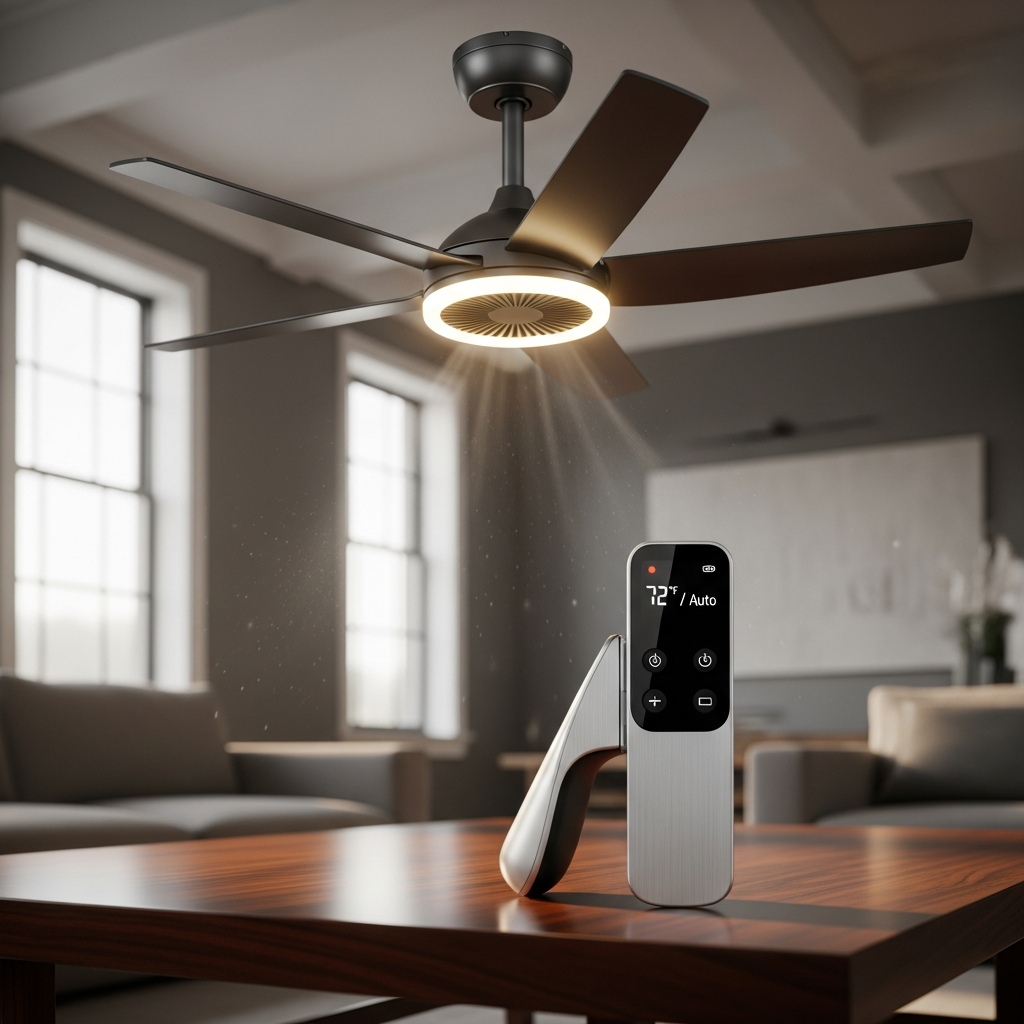
The Ultimate Guide to Smart Ceiling Fans with Remotes for Modern Indian Homes
- The Ultimate Guide to Smart Ceiling Fans with Remotes for Modern Indian Homes
- Section 1: The Evolution of Cooling – Why Smart Fans are the New Standard
- Section 2: The Buyer’s Checklist – Key Features for the Indian Context
- Section 3: The Showdown – Top 3 Smart Ceiling Fans for Indian Homes
- Section 4: Seamless Installation and Smart Home Integration
- Section 5: ROI, Maintenance, and Final Verdict
- A. The Economics of Smart Fans (Calculating ROI)
- B. Maintenance Best Practices
- C. Navigating Warranties and Customer Service
- D. Conclusion
- Do I need Wi-Fi to use a smart ceiling fan with a remote?
- Can I control a smart ceiling fan with both a remote and my smartphone?
- Are smart ceiling fans energy efficient?
- ⚡ Smart Home Checklist
Key Takeaways: * BLDC technology is essential for Indian homes, saving up to ₹2000 annually per fan and running 3x longer on inverters. * Always bypass the traditional wall regulator during installation to prevent motor damage and ensure smooth smart operations. * Look for a high CMM (Cubic Meters per Minute) rating rather than just high RPM to guarantee superior air delivery. * True smart fans offer Wi-Fi integration and voice control, moving far beyond basic infrared (IR) remotes.
Section 1: The Evolution of Cooling – Why Smart Fans are the New Standard
A. The Indian Summer & The Need for Innovation
The harsh reality of an Indian summer makes the ceiling fan the single hardest-working appliance in any household. For decades, we relied on functional, noisy, and energy-draining appliances that barely survived intense power fluctuations. Today, that narrative is shifting rapidly toward sleek, intelligent cooling systems designed for modern living.
B. Defining the "Smart" Ceiling Fan
What elevates a basic fan to a "smart" one? It goes far beyond a standard infrared (IR) remote, stepping into true IoT-enabled Wi-Fi connectivity. The primary convenience factor is undeniable: you completely eliminate the need to get out of bed to change the speed or turn off the fan.
C. The BLDC Revolution in India
Brushless Direct Current (BLDC) motor technology is the undisputed hero of modern Indian cooling. Unlike traditional induction motors, BLDC drives the fan using electronic controls, reducing friction and drastically cutting power consumption. This tech handles intense voltage fluctuations without speed drops and runs up to 3x longer on home inverters during power cuts.
D. The Aesthetic Upgrade
Gone are the days when a ceiling fan looked like a clunky piece of industrial hardware. Today’s smart ceiling fans integrate seamlessly into modern Indian interior design with minimalist aesthetics, integrated under-lights, and premium finishes. Coordinating these stylish fans with upgrades like Motorized Curtain Tracks India | Smart Homes instantly elevates the luxury quotient of your space.
Section 2: The Buyer’s Checklist – Key Features for the Indian Context
A. Air Delivery & Sweep Size
When shopping, you must demystify CMM (Cubic Meters per Minute) and RPM (Revolutions per Minute). A higher RPM doesn't always mean better cooling; high CMM is the true indicator of how much air is actually being pushed across the room. For typical Indian room dimensions, a 1200mm sweep size perfectly handles standard 10x10 ft to 12x14 ft bedrooms.
B. Control Ecosystems (Remote vs. App vs. Voice)
Your control options generally split into three categories: remote, app, and voice. When it comes to remotes, prioritize Radio Frequency (RF) over Infrared (IR) because RF doesn't require direct line-of-sight to work. App controls unlock powerful features like sleep modes and scheduling, while voice integration seamlessly connects with Indian smart home staples like Amazon Alexa and Google Assistant.
C. Dust & Moisture Resistance
The Indian urban environment is notorious for heavy dust accumulation and seasonal humidity. To combat this, premium smart fans now feature advanced anti-dust coatings utilizing oleophobic or hydrophobic paints. This significantly reduces your weekend cleaning chores and keeps the fan operating efficiently.
D. Noise Profile & Aerodynamics
The industry is finally shifting away from stamped metal blades toward highly aerodynamic ABS or wood-finish blades. This design evolution guarantees virtually silent operation. Eliminating motor hum and wind-shearing noise is absolutely crucial for modern bedrooms and home offices.
Section 3: The Showdown – Top 3 Smart Ceiling Fans for Indian Homes
A. The Pioneer: Atomberg Renesa Smart+
This fan is the ultimate champion of energy efficiency and tech integration in the Indian market. Consuming a mere 28W of power, it features full IoT capabilities, LED speed indicators, and a solid 3-year warranty. * Pros: Incredible inverter performance; robust app connectivity; excellent energy savings. * Cons: The hyper-minimalist design might not suit homes with traditional, ornate decor. Buy Atomberg Renesa Smart+
B. The Premium Aesthetic Choice: Havells Carnesia-I
If you are a homeowner looking for luxury, multi-color under-lighting, and premium build quality, this is your fan. It features a brilliant "Smart Mode" that automatically adjusts the speed based on ambient room temperature and humidity. * Pros: Exceptional visual appeal; intuitive multi-user app control; smart climate sensing. * Cons: Higher premium price point; consumes slightly more power than the Atomberg. Buy Havells Carnesia-I
C. The Silent Workhorse: Crompton SilentPro Enso Smart
Engineered for light sleepers and areas prone to high dust accumulation, this model stands out for its serene operation. Powered by ActivBLDC tech, it produces 50% lesser noise while delivering an extreme 315 CMM of air delivery. * Pros: Industry-leading air delivery; genuinely silent operation; effective anti-dust coating. * Cons: The companion app interface is functional but feels slightly less polished than its competitors. Buy Crompton SilentPro Enso Smart
D. Quick Comparison Matrix
| Feature | Atomberg Renesa Smart+ | Havells Carnesia-I | Crompton SilentPro Enso |
|---|---|---|---|
| Price Range | ₹4,500 - ₹5,500 | ₹6,000 - ₹7,500 | ₹5,000 - ₹6,000 |
| Wattage | 28W | 32W | 31.5W |
| Air Delivery | 230 CMM | 240 CMM | 315 CMM |
| Warranty | 3 Years | 2 Years | 5 Years (Motor) |
| Unique Feature | LED Speed Indicators | Climate "Smart Mode" | 50% Noise Reduction |
Section 4: Seamless Installation and Smart Home Integration
A. The Golden Rule of Installation: Bypassing the Regulator
Here is a critical warning: Indian homeowners must physically bypass or completely remove the traditional wall regulator when installing a BLDC smart fan. Leaving the old regulator connected will strangle the voltage going to the integrated circuit. This guarantees motor damage, remote malfunctions, and a voided warranty.
B. Wiring and Physical Setup
Dealing with older, ungrounded wiring in Indian apartments requires a careful hand and preferably a certified electrician. Ensure you select the proper downrod length for optimal air circulation, aiming for a 7 to 8-foot clearance from the floor. This is especially vital for modern homes featuring dropped false ceilings.
C. Pairing and Ecosystem Setup
Connecting your fan to the home Wi-Fi network usually requires a strict 2.4GHz connection, as most smart appliances do not support 5GHz bands. Once connected to your router, simply download the brand’s proprietary app and follow the on-screen pairing instructions. Much like setting up Smart Kitchen Appliances 2026: Future Tech Guide, the initial setup takes just minutes but pays off for years.
D. Automating Your Comfort (Routines)
Smart routines are where these fans truly shine for the Indian lifestyle. Create a "Summer Sleep Routine" that automatically drops the fan speed by 1 step every two hours to match the naturally cooling night air. You can even set a "Leaving Home" voice command to turn off your fans, lights, and Best Smart Pet Feeders: Top Automatic Dispensers simultaneously as you walk out the door.
Section 5: ROI, Maintenance, and Final Verdict
A. The Economics of Smart Fans (Calculating ROI)
While the upfront cost is higher, the economics of smart fans make them a brilliant investment. A traditional induction fan consumes around 75W, whereas a smart BLDC fan uses only 28W at maximum speed. Depending on your state's electricity tariffs, this translates to an annual savings of ₹1500 to ₹2000 per fan, meaning the unit pays for itself in just 2 to 3 years.
B. Maintenance Best Practices
To clean your fan's aerodynamic blades without ruining the anti-dust coating, strictly avoid harsh Indian detergents or abrasive scrubbers. A simple, dry microfiber cloth is all you need to wipe away superficial dust every few weeks. Additionally, ensure you occasionally check the manufacturer's app to download over-the-air firmware updates for your fan.
C. Navigating Warranties and Customer Service
Most premium Indian brands offer standard 2 to 3-year warranties that cover both the motor and the smart circuitry. Keep in mind that many modern brands require you to register your purchase digitally on their app or website within 30 days to activate the warranty. Keep your digital invoice safely backed up on your phone for hassle-free customer service claims.
D. Conclusion
Upgrading to a smart ceiling fan with a remote is no longer a futuristic gimmick reserved for ultra-luxury homes. It is a highly practical, necessary step for achieving superior energy efficiency, absolute comfort, and modernization. By making the switch, you take total control over your home's climate while keeping your electricity bills permanently grounded.
Conclusion
Upgrading to a smart ceiling fan with a remote control is more than just a nod to modern convenience—it is a brilliant investment in your home's comfort, energy efficiency, and aesthetic appeal. Whether you want to integrate your fan seamlessly into an existing smart home ecosystem, utilize hands-free voice commands, or simply enjoy the luxury of adjusting the fan speed from the comfort of your couch, these innovative fixtures deliver on all fronts. By choosing a model that perfectly balances your room size, design preferences, and technological needs, you secure a highly customizable breeze all year round. Embrace the future of home cooling and elevate your everyday living space today.
Frequently Asked Questions
Do I need Wi-Fi to use a smart ceiling fan with a remote?
While Wi-Fi is required to access advanced "smart" features like voice control (via Alexa or Google Assistant), smartphone app integration, and scheduling, you do not need Wi-Fi for basic operation. The included physical remote control uses radio frequency (RF) or infrared (IR) to function perfectly without an internet connection.
Can I control a smart ceiling fan with both a remote and my smartphone?
Yes! Most smart ceiling fans are designed for multi-point control. You can use the included physical remote for quick, everyday adjustments, and switch to your smartphone app or voice assistant for detailed scheduling, setting routines, or controlling the fan while you are away from home.
Are smart ceiling fans energy efficient?
Absolutely. Smart ceiling fans often feature highly efficient DC motors that use up to 70% less electricity than traditional AC motors. Additionally, the ability to set automated schedules, use temperature-based triggers, and control the fan remotely ensures it only runs when necessary, significantly reducing your overall energy consumption and utility bills.