Top Microinverter Brands of 2024: Compare the Best
Upgrading to solar? Choosing the right microinverter is crucial for maximizing energy output and monitoring individual panel performance. Explore our comprehensive guide to the best microinverter brands, including Enphase, APsystems, and Hoymiles, to find the perfect match for your solar system.
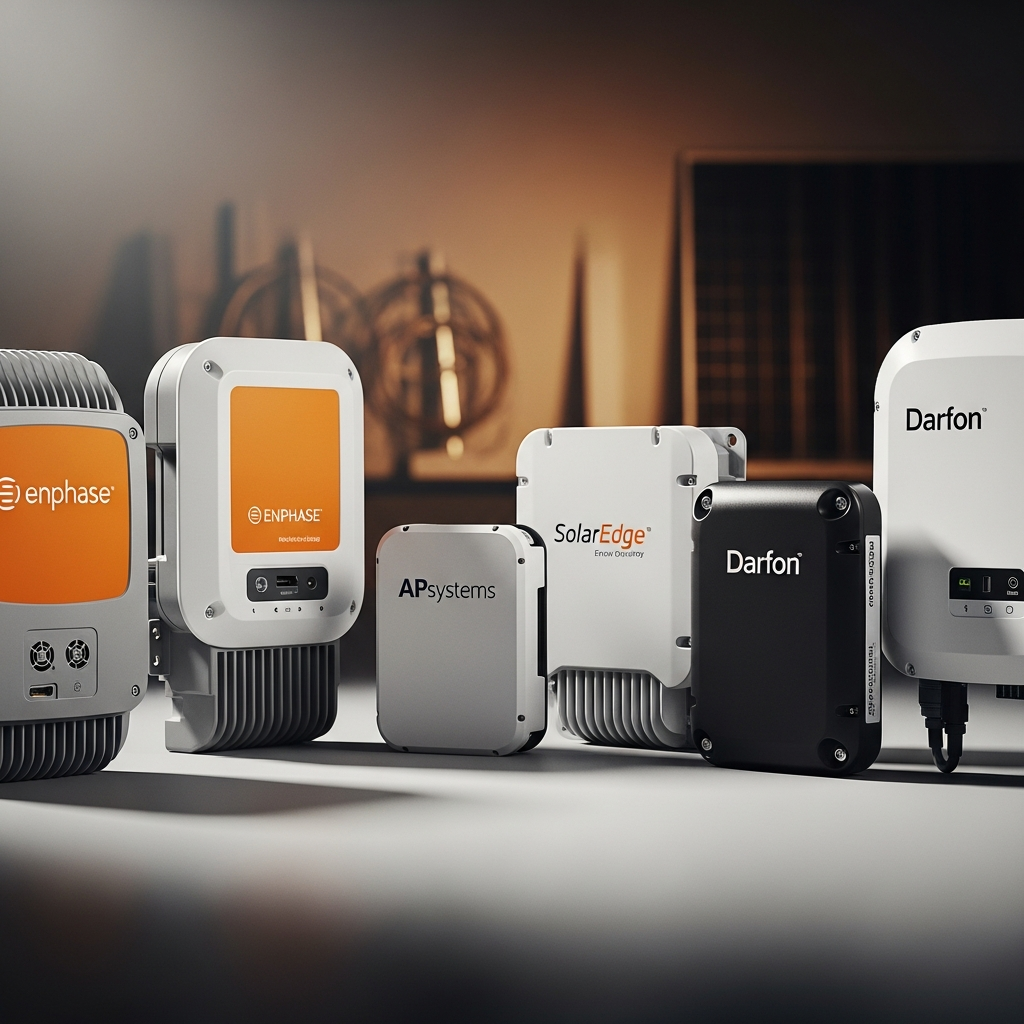
Authoritative Guide: The Best Microinverter Brands for Indian Homes
Section 1: Introduction to Microinverters & The Indian Solar Landscape
1.1 The Shift in Indian Rooftop Solar
Across India, grid tariffs are climbing steadily. With DISCOMs hiking per-unit electricity rates, Indian homeowners are aggressively turning to residential solar power. Accelerated by government initiatives like the PM Surya Ghar Muft Bijli Yojana, rooftop solar is transitioning from basic, clunky setups to highly efficient, "smart" solar systems. Homeowners no longer just want power; they want optimized, digitally monitored, and aesthetically pleasing installations.
1.2 What is a Microinverter? (Demystified for Homeowners)
To understand a microinverter, you first need to understand what an inverter does: it converts the direct current (DC) generated by your solar panels into alternating current (AC) used by your home appliances.
Instead of a single, large inverter box mounted on your wall, a microinverter is a miniaturized inverter attached to the back of each individual solar panel, performing the DC-to-AC conversion right at the roof level. Think of it like modern Christmas tree lights—if one bulb (or panel) goes out or gets shaded, the rest of the string continues to shine brightly and work flawlessly.
1.3 Why Microinverters Make Sense for Indian Homes
- The "Water Tank" Problem: Indian terraces are rarely empty. They feature overhead water tanks (like Sintex), bulky AC outdoor units, and are often shadowed by neighboring multistory buildings. In a traditional setup, shade from a water tank on just one panel drags down the performance of the entire system. Microinverters isolate this issue so only the shaded panel drops in power.
- Roof Constraints: Urban Indian homes often have small, uniquely shaped, or multi-directional roofs (such as combinations of East/West and South facing sections). Microinverters allow panels to operate independently, maximizing generation across complex roof layouts. If you aren't sure how many panels your specific roof can handle, check out our guide on how to calculate solar panel requirement.
- Fire Safety: Standard solar setups run high-voltage DC electricity (up to 600V-1000V) across your roof. Microinverters instantly convert this to standard 230V AC at the panel. In densely packed Indian neighborhoods, keeping high-voltage DC off the roof is a critical fire safety feature.
Section 2: String Inverters vs. Microinverters – The Cost-Benefit Analysis
To justify the premium of microinverters, we must look at the data.
2.1 The Traditional String Inverter (The Baseline)
In a string inverter setup, panels are connected in a series (a "string"). * Pros: They boast a lower initial upfront cost (₹) and are widely available across India. * Cons: They suffer from the "weakest link" effect. If bird droppings or a shadow covers 15% of one panel, the output of every panel in that string drops by 15%. Furthermore, they have a shorter average lifespan (usually around 10 years) before needing replacement.
2.2 The Microinverter Advantage
- Yield Increase: By allowing each panel to operate at its maximum potential regardless of its neighbors, microinverters generate 5% to 15% more electricity annually compared to string systems.
- Panel-Level Monitoring: You get a smartphone app detailing the exact performance of every single panel. It becomes incredibly easy to spot dust buildup, local shading, or a faulty panel instantly.
- Longevity: Microinverters are heavily weather-sealed and built to last 25 years, matching the 25-year performance lifespan of the solar panels themselves.
2.3 The Price Premium in India
Let’s be honest about the numbers: opting for a microinverter system in India typically costs ₹15,000 to ₹25,000 more per kilowatt (kW) compared to a string inverter setup.
Expert Verdict: This premium is highly justified if your roof experiences partial shading throughout the day, if you have a premium villa where fire safety and aesthetics are paramount, or if you are focused on maximizing 25-year long-term ROI. If you have a massive, unshaded, perfectly South-facing commercial flat roof, a string inverter might still be the more economical choice.
Section 3: The Definitive List: Top Microinverter Brands in India
Here are the most reliable, BIS-approved microinverter brands currently transforming the Indian residential market.
3.1 Enphase Energy (The Undisputed Premium Leader)
- Overview: The American company that pioneered microinverter technology. They hold the largest market share globally for premium residential solar.
- Top Models in India: The Enphase IQ7A and the cutting-edge Enphase IQ8 series, which boasts grid-forming capabilities.
- Pros: Unmatched failure-rate reliability (less than 0.05%), the superior Enphase Enlighten monitoring app, excellent localized customer support in India, and a genuine 25-year warranty.
- Cons: They command the highest price point in the market.
- Best for: Homeowners wanting the absolute best technology with zero compromises.
3.2 Hoymiles (The Value-for-Money Champion)
- Overview: A rapidly growing brand in the Indian market, famous for delivering high efficiency at highly aggressive pricing.
- Top Models in India: The Hoymiles HMS Series, specifically their Hoymiles 2-in-1 Microinverter and Hoymiles 4-in-1 Microinverter systems.
- Pros: Connecting 2 or 4 panels to a single microinverter unit drastically reduces the per-kW installation cost while retaining panel-level optimization. They effortlessly handle the high-wattage panels standard in India today.
- Cons: The monitoring app interface is slightly less refined than Enphase, and consumer brand recognition is still building.
- Best for: Budget-conscious buyers who want microinverter benefits at a price point much closer to string inverters.
3.3 APsystems (The Strong Alternative)
- Overview: Pioneers of multi-module microinverters, APsystems is a robust competitor to Hoymiles.
- Top Models in India: The APsystems DS3 series and the APsystems QT2 (designed specifically for 3-phase residential grid connections).
- Pros: Extremely high continuous output power, making them perfect for the 540W+ panels popular in India. Their native 3-phase integration is excellent for larger Indian homes.
- Cons: Warranty terms can be complex (often a standard 10 years, which must be extended to 20 years for an additional fee).
3.4 Honorable Mentions & Emerging Tech
If microinverters aren't exactly what you need, other technologies are bridging the gap. DC Optimizers, like the SolarEdge DC Optimizer, attach to panels but send power to a central inverter, offering a middle-ground alternative. Additionally, hybrid brands are entering the space; for instance, the Deye Microinverter is gaining traction for its robust build quality.
Top 3 Product Comparison
| Feature | Enphase (IQ Series) | Hoymiles (HMS Series) | APsystems (DS3/QT2) |
|---|---|---|---|
| Setup Type | 1-to-1 (One per panel) | 2-in-1 & 4-in-1 available | 2-in-1 & 4-in-1 available |
| Price Point | Premium (Highest) | Affordable (Value) | Mid-Range |
| Warranty | 25 Years (Standard) | 12 Years (Extendable to 25) | 10 Years (Extendable to 20) |
| Monitoring App | Excellent (Enlighten) | Good (S-Miles Cloud) | Good (EMA App) |
| Best Feature | Unmatched reliability & local support | Drastically lowers per-kW cost | Great 3-phase home integration |
Section 4: Crucial Buying Criteria for Indian Environments
Before signing a quote with a solar installer, evaluate your microinverters against this strict Indian-climate checklist:
4.1 High-Wattage Panel Compatibility
Indian installers are aggressively pushing large-format panels (540W, 550W, Bifacial Mono-PERC). Your chosen microinverter must be rated to handle this high continuous DC input. If a microinverter's max input is too low, it will "clip" the power, meaning you lose out on peak midday generation.
4.2 Weather Resilience (The Indian Climate Test)
- Heat Degradation: Roofs in North and Central India get dangerously hot. Ensure the microinverter is rated for high operating temperatures (up to 65°C) without throttling power.
- Monsoon Proofing: With intense Indian monsoons, the unit must have an IP67 rating for ingress protection, ensuring it is entirely immune to heavy rain, humidity, and atmospheric dust.
4.3 Indian Certifications & Grid Compliance
BIS Certification is non-negotiable. Without Bureau of Indian Standards (BIS) approval, you cannot legally connect your system to the grid via net-metering with local DISCOMs (like BESCOM, Tata Power, or BSES), nor can you claim the PM Surya Ghar subsidies.
4.4 Localized Warranty & Service Networks
A "25-year global warranty" is useless if the brand doesn't have a registered service network in India. Ask your installer about the local RMA (Return Merchandise Authorization) process. Brands like Enphase shine here because they stock replacement units domestically, meaning a failed unit is swapped in days, not months.
Section 5: Installation, ROI, & The Final Verdict
5.1 Finding the Right Installer
Microinverters require specialized wiring components, specifically heavy-duty AC trunk cables. You must choose a brand-certified installer (such as an Enphase Platinum Installer) over a generic local electrician to ensure the wiring is safe and warranties remain valid.
5.2 Calculating the ROI for Indian Homes
Let's look at a standard 5kW residential system. By avoiding shading from water tanks and utilizing panel-level optimization, a microinverter system typically yields 10% more daily generation than a string inverter. Over 25 years, that extra energy completely absorbs the higher initial cost. In states with high electricity tariffs (like Maharashtra, Karnataka, or UP), the expected payback period is a highly attractive 4 to 6 years.
(Note: Wondering if a 5kW system is enough for your heavy appliances? Read our breakdown on can solar panels run 1.5 ton ac to see exact load calculations).
5.3 Battery Integration (Looking Ahead)
Power cuts are a reality in India. A massive advantage of modern microinverters is how effortlessly they pair with AC-coupled batteries, like the Enphase IQ Battery, to provide seamless home backup. If you are debating between a smart microinverter battery setup and a traditional off-grid approach, you can explore the best hybrid solar inverter for home to compare your backup options.
5.4 Summary Recommendations
- The "Money is no object" pick: Go with Enphase. The peace of mind, app quality, and absolute reliability are unmatched.
- The "Smart Investment" pick: Go with Hoymiles or APsystems. Their multi-module units offer 90% of the premium benefits at a fraction of the cost.
Final Call to Action: Don't settle for the first quote. Get at least 3 distinct quotes from local installers, thoroughly check your roof's shadow profile across the day, and insist in writing that every component—especially your microinverters—is BIS-approved for the Indian grid.
Conclusion
Choosing the right microinverter brand is a crucial step in maximizing the efficiency, safety, and longevity of your solar panel system. While traditional string inverters have their place, microinverters offer unmatched panel-level optimization, making them essential for roofs with complex angles or shading issues.
Enphase Energy remains the undisputed industry leader, offering unmatched reliability, cutting-edge software, and robust customer support, making it the best overall choice for most homeowners. However, brands like APsystems and Hoymiles provide excellent, high-performing alternatives that deliver exceptional value at a more budget-friendly price point. Ultimately, the best microinverter for your home will depend on your specific energy needs, budget, and the recommendations of your chosen solar installer. Always consult with a certified solar professional to ensure your system is designed for peak, long-term performance.
Frequently Asked Questions (FAQ)
What is the lifespan of a typical microinverter?
High-quality microinverters from top brands like Enphase typically come with a 25-year warranty, which is designed to match the lifespan of the solar panels themselves. This is significantly longer than traditional string inverters, which usually need replacing every 10 to 15 years.
Are microinverters worth the extra cost?
Yes, in most cases, microinverters are worth the investment. They are particularly beneficial if your roof experiences partial shading, has multiple angles, or if you want panel-level monitoring. By optimizing each panel individually, microinverters can significantly increase your system's overall energy production over its lifetime.
Can I mix and match different microinverter brands in one solar system?
It is highly recommended not to mix different microinverter brands within the same solar system. Different brands use proprietary communication protocols and monitoring software that are not compatible with one another. Sticking to a single brand ensures seamless integration, reliable performance tracking, and straightforward warranty claims.