Best Smart Home Hubs 2026: Reviews & Top Picks
The smart home landscape is evolving fast. Our 2026 guide cuts through the noise to find the best smart home hubs for your ecosystem. We've reviewed the latest offerings, focusing on multi-protocol support like Matter, Thread, and Zigbee. Find the perfect central controller for your automated home.
- Authoritative Guide: The Best Smart Home Hubs for Modern Indian Homes (2026 Edition)
- Section 1: Introduction – The Shift from "Connected" to "Intelligent" Indian Homes
- Section 2: Crucial Buying Parameters for the Indian Market
- Section 3: Top 3 Product Comparison (The 2026 Showdown)
- Section 4: Integrating the Hub with High-Impact Indian Home Scenarios
- Section 5: Setup, Security, and Future-Proofing
- Conclusion
- Frequently Asked Questions
Key Takeaways: * 2026 is the year of the Hub: Relying on your standard Wi-Fi router for 50+ smart devices will choke your broadband; dedicated Matter and Thread hubs are now essential. * Local Processing Wins: Unpredictable broadband drops require hubs that process automations offline so your home functions without the cloud. * Thick Walls Need Mesh: Zigbee and Thread mesh networking effortlessly bypasses the Wi-Fi dead-zones caused by thick Indian RCC concrete walls. * Desi Integration: The best smart hubs seamlessly handle Hinglish and monitor heavy-duty Indian appliances like 2-Ton ACs and water pumps to save electricity.
Authoritative Guide: The Best Smart Home Hubs for Modern Indian Homes (2026 Edition)
Section 1: Introduction – The Shift from "Connected" to "Intelligent" Indian Homes
1.1 The State of the Indian Smart Home in 2026
We have finally moved past the gimmick of basic Wi-Fi smart bulbs. In 2026, Indian homeowners are demanding true, whole-home automation that functions effortlessly in the background. The massive adoption of Matter and Thread protocols in India means universal device compatibility is no longer a pipe dream.
Furthermore, the industry has shifted from Cloud-based to Edge-based (Local) AI processing. This means your smart home responds instantly, without waiting for a server halfway across the world to process your command.
1.2 What Exactly is a Dedicated Smart Home Hub?
It is crucial to differentiate between a basic smart speaker, like an entry-level Echo Dot, and a true Smart Home Hub. A dedicated hub acts as the actual "brain" of the house, communicating across multiple radio frequencies, not just Wi-Fi.
Relying solely on your Jio or Airtel Wi-Fi router for 50+ smart devices is a massive mistake. This setup creates IP congestion, inevitably slowing down your broadband network and causing devices to randomly drop offline.
1.3 Why Indian Homes Uniquely Require a Central Hub
Indian architecture features thick RCC (Reinforced Concrete) walls, which are notorious Wi-Fi killers. Dedicated hubs utilize Zigbee and Thread mesh networking, where every powered device acts as a repeater to easily bypass these concrete dead-zones in large apartments and villas.
Internet reliability is another major factor for Indian buyers. You absolutely need a hub that offers local control, ensuring your morning routines trigger flawlessly even when your fiber connection goes down. Lastly, hubs are essential for Energy Management, actively monitoring heavy appliances like 16A Geysers and 1.5-2 Ton ACs to combat aggressively rising electricity tariffs.
Section 2: Crucial Buying Parameters for the Indian Market
2.1 Protocol Support (The Future-Proofing Checklist)
Future-proofing your home requires a hub that speaks multiple technological "languages." Your bare minimum checklist must include Matter (over Wi-Fi and Thread), Zigbee 3.0, and Bluetooth Low Energy (BLE).
Legacy support for Z-Wave is optional but highly recommended if you plan on importing older, high-end sensors. Avoiding Wi-Fi-only hubs ensures you save precious router bandwidth for 4K streaming and gaming.
2.2 Voice & AI Localization
A smart home is only as good as its ability to understand the people living in it. You need deep support for Indian languages and dialects, including seamless Hinglish, Tamil, and Telugu integration.
In 2026, Generative AI integration is a game-changer for smart hubs. Instead of manually programming complex logic, you can simply tell your hub to "Create a routine for Diwali pooja lighting," and the AI will build the automation for you.
2.3 Power Resilience & Infrastructure
Indian voltage fluctuations can fry sensitive imported electronics in seconds. Ensure your chosen hub features robust internal surge protection requirements or is plugged into a high-quality UPS.
You must also consider auto-reboot capabilities and battery backup. Your hub needs to recover seamlessly during sudden monsoon power cuts or the 3-second delay during an inverter switchover.
2.4 Compatibility with "Desi" Ecosystems
Your shiny new hub is useless if it cannot talk to the hardware actually sold in Indian hardware stores. Ensure native integration with aggressively priced local brands.
Look for verified compatibility with ecosystems like Wipro Next, Syska, Havells, Godrej Smart Locks, and Anchor by Panasonic. These brands dominate the Indian mass market and form the backbone of affordable home automation.
Section 3: Top 3 Product Comparison (The 2026 Showdown)
3.1 Contender 1: Amazon Echo Hub Gen 2 (The Mass-Market King)
This is the ultimate command center for families wanting affordable, highly visual control. Priced aggressively at ₹14,999, it seamlessly integrates into homes already using Alexa.
- Best For: Families needing highly visual, affordable control and seamless Hinglish voice integration.
- Key Specs: Matter controller, Thread Border Router, built-in Zigbee hub, 8-inch edge-to-edge display.
- Pros for India:
- Phenomenal, instant compatibility with local budget brands (Wipro, Zebronics).
- Best-in-class multi-lingual and Hinglish voice recognition.
- Acts as a digital photo frame and intercom system.
- Cons:
- Heavy reliance on cloud processing for complex routines.
- Aggressive upselling and sponsored content on the home screen.
3.2 Contender 2: Apple HomePod / Apple TV 4K [2026 Silicon Edition] (The Privacy Champion)
Apple’s 2026 lineup brings powerhouse processing to the smart home, starting at ₹32,900. It is unmatched for users heavily entrenched in iOS devices.
- Best For: Users already in the Apple ecosystem prioritizing data privacy and an ultra-smooth, premium UI.
- Key Specs: A-series Bionic chips for on-device Siri processing, Matter/Thread, and Spatial Audio.
- Pros for India:
- Absolute best-in-class data privacy; video feeds are never stored on external servers.
- Highly stable, localized on-device processing that survives internet outages.
- Premium acoustic and aesthetic design for modern, high-end interiors.
- Cons:
- The steep "Apple Tax" makes it a premium investment in INR.
- Lacks a native Zigbee radio, requiring separate Matter bridges for older devices.
3.3 Contender 3: Homey Pro 2026 / Hubitat Elevation C-9 (The Enthusiast's Choice)
Built for the absolute power user, the Homey Pro commands a premium at ₹39,999. It offers unparalleled control for sprawling villas requiring bulletproof offline reliability.
- Best For: Tech-savvy homeowners and large multi-story villas requiring complex, 100% offline automations.
- Key Specs: Multi-antenna design (Zigbee, Z-Wave, Matter, Thread, 433MHz, IR), local automated backups.
- Pros for India:
- 100% local processing; routines execute instantly even during total broadband blackouts.
- Controls legacy, non-smart devices via built-in IR (perfect for older Voltas ACs or Tata Sky set-top boxes).
- Unmatched logic programming for advanced "If-This-Then-That" scenarios.
- Cons:
- Very steep learning curve for non-technical users.
- No built-in voice assistant; requires pairing with Alexa or Google Home speakers.
3.4 The Verdict Matrix
| Price Bracket | Hub Model | Primary Protocols | Offline Capability | Indian Language Support | Ideal Home Size | Best Use Case |
|---|---|---|---|---|---|---|
| ₹14,999 | Amazon Echo Hub Gen 2 | Matter, Thread, Zigbee | Partial (Routine dependent) | Excellent (Hinglish/Regional) | 2BHK - 3BHK | Affordable family control & visual dashboard |
| ₹32,900 | Apple HomePod 2026 | Matter, Thread, BLE | High (On-device AI) | Good (Siri Localized) | 3BHK - 4BHK | Apple ecosystem loyalists & privacy focus |
| ₹39,999 | Homey Pro 2026 | Matter, Thread, Zigbee, Z-Wave, IR | 100% Offline | N/A (Requires external speaker) | Large Villas | Complex automations & legacy tech integration |
Section 4: Integrating the Hub with High-Impact Indian Home Scenarios
4.1 Climate Control & Energy Efficiency
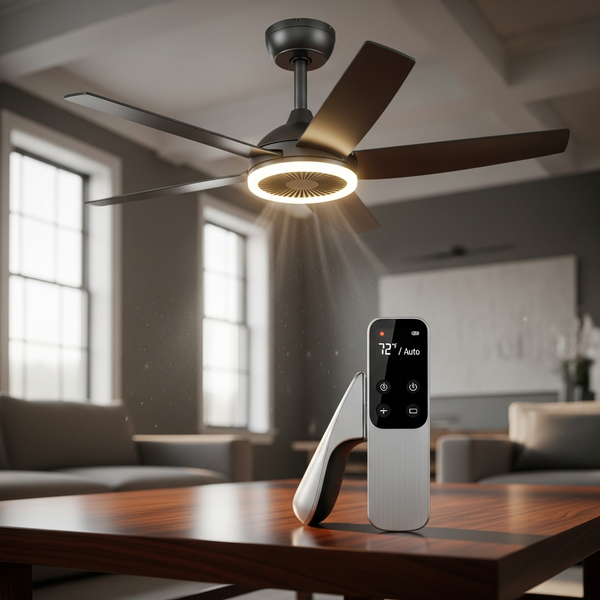
Air conditioning accounts for massive electricity bills during Indian summers. Linking your hub to smart ACs and ceiling fans (like Atomberg or Orient) allows you to optimize cooling dynamically based on local IMD weather APIs.
You can drastically cut costs by automating 16A/25A heavy-duty smart plugs for water geysers. Set routines to turn the geyser on automatically at 6:30 AM in winter, and strictly shut it off if it has been running for more than 45 minutes.
4.2 Advanced Security for Gated Communities & Villas
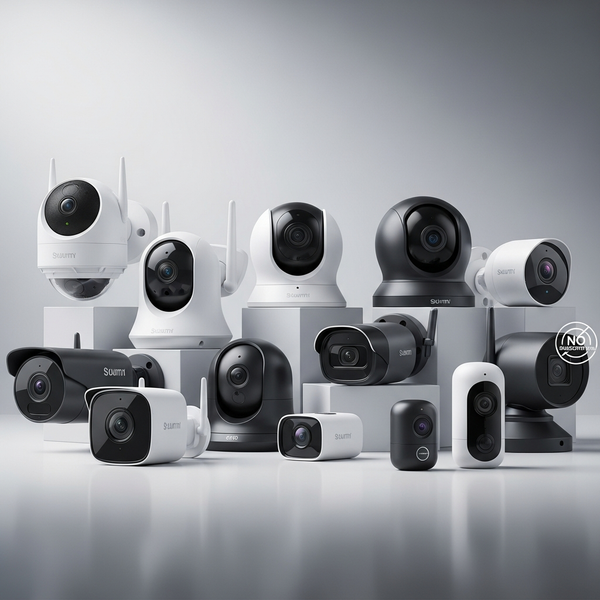
Home security goes beyond simple cameras; it requires integration. Connect video doorbells from Qubo or CP Plus, alongside Godrej or Yale smart locks, directly into your central hub for unified access control.
Deploy advanced "Vacation Mode" automations when the family travels for extended holidays. The hub will automatically randomize living room lighting and send motion-sensor-triggered alarm snapshots directly to your WhatsApp.
4.3 Festive and Mood Lighting (The Indian Aesthetic)
Transform your living spaces instantly for house parties, movie nights, or traditional festivals. Use your hub to group RGB-IC LED strips and smart bulbs to create breathtaking, synchronized lighting scenes.
Instead of flipping ten different switches, a single "Diwali Mode" voice command can illuminate your home's exterior and dim the interior lighting perfectly.
4.4 Water Management (A Unique Indian Need)
Managing municipal water supply timings is a uniquely Indian household chore. Integrate your smart hub with smart water level controllers to automate your overhead tank pumps.
The hub can trigger the heavy-duty pump automatically when municipal water is detected, shutting it off precisely when the overhead tank hits 95% capacity to prevent overflow.
Section 5: Setup, Security, and Future-Proofing
5.1 Placement & Network Architecture Layout
Where you place the hub dictates the reliability of your entire smart home. In a typical 3BHK/4BHK Indian layout, place the hub in the central-most room, elevated away from heavy metal appliances or fish tanks.
Understanding the "Mesh" is critical; adding strategically placed smart plugs around concrete pillars is a game-changer. Because hardwired Zigbee and Thread devices act as wireless repeaters, spreading them out naturally fortifies the whole network's range.
5.2 Securing Your Smart Home from Cyber Threats
IoT devices are notoriously vulnerable to hacking. Protect your main network by creating a dedicated "Guest Wi-Fi" VLAN on your router specifically and exclusively for your smart devices.
Never ignore software updates for your smart home ecosystem. Ensuring your hub has the latest firmware and enabling Two-Factor Authentication (2FA) on all companion apps is non-negotiable for digital security.
5.3 The Expert's Final Verdict
Investing in a dedicated, Matter-enabled hub in 2026 is no longer an extravagant luxury; it is a long-term investment that actually increases modern property value. It centralizes control, fixes Wi-Fi congestion, and dramatically lowers your carbon footprint and electricity bills.
Call to Action: Before purchasing your new hub, audit your current home. List your existing Wi-Fi bulbs, verify your router's maximum device limit, and ensure you purchase a hub with Zigbee and Thread to handle your future upgrades seamlessly!
Conclusion
As we move through 2026, the smart home landscape has never been more unified or intelligent. Thanks to the universal adoption of Matter and Thread, the days of agonizing over brand compatibility are largely behind us. Choosing the best smart home hub now ultimately comes down to your preferred ecosystem, your need for advanced AI automation, and your technical comfort level.
Whether you crave the plug-and-play simplicity of the Apple HomePod or Google Nest Hub, the proactive AI features of the latest Amazon Echo, or the ultimate localized power of a Home Assistant setup, there is a perfect command center for your home. By investing in a high-quality hub today, you ensure that your home network remains fast, secure, and capable of scaling with the next generation of smart technology. Evaluate your current devices, pick your ecosystem, and enjoy the seamless, automated living experience that 2026 has to offer.
Frequently Asked Questions
Do I still need a smart home hub in 2026?
While many smart devices can connect directly to your router via Wi-Fi, a dedicated smart home hub is still highly recommended. A hub serves as a central brain for your home, allowing for complex local automations that continue to work even if the internet goes down. Furthermore, modern hubs act as Thread border routers and Matter controllers, which significantly increase device response times, improve battery life for sensors, and reduce the bandwidth strain on your standard Wi-Fi network.
What is the difference between Matter and a smart home hub?
Matter is a universal software connectivity standard—essentially a common language that allows devices from different manufacturers to securely communicate with one another. A smart home hub, on the other hand, is the physical hardware device. The hub acts as the Matter controller that manages these communications, runs your personalized automation routines, bridges different wireless protocols (like Zigbee, Z-Wave, and Thread), and connects your devices to the internet for remote control.
Can I use multiple smart home hubs together?
Yes! In 2026, using multiple hubs is easier than ever thanks to the "multi-admin" feature built directly into the Matter standard. This allows multiple hubs from different brands to exist on the same network and control the exact same devices. For example, you can have an Apple TV 4K in the living room and a Google Nest Hub in the kitchen, allowing different family members to control the home's lights and locks using either Siri or Google Assistant seamlessly.